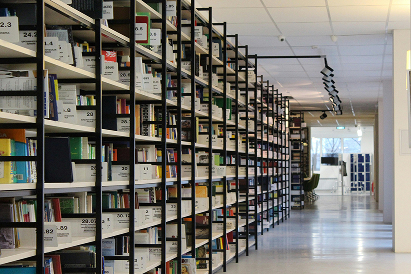


Infrastructure & Facilities
IT Infrastructure
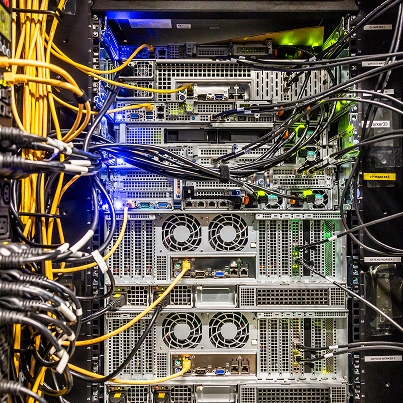
BHT has secured substantial funding for computer science from BMFTR, BMWE, EU, and DFG FIP programs to establish a cluster for in-memory databases, large-scale data processing, and large GPU systems. In addition, through the BMWi-funded SOOFI project, BHT has access to more than 1,000 NVIDIA B200 GPUs for training the next generation of foundation models. This enables BHT to independently conduct experiments with large foundation models and agents in the field of machine learning.
The local infrastructure includes CPU nodes, each equipped with 1 TB of RAM, as well as 16 × 50 TB of storage for a distributed CephOS file system. Furthermore, the university operates a high-performance DELL SAN; GPU nodes based on NVIDIA B200, H200, A100, and V100 architectures; and corresponding InfiniBand networking technology with hot- and cold-aisle containment.
Similarly, HTW Berlin established a high-performance cluster for ML research and teaching (via BMBF funding). It includes a JupyterHub with A30-GPUs for fast prototyping and data exploration, a local LLM setup with H100-GPUs, as well as a SLURM-Cluster with A100-GPUs for multi-GPU training of models and dealing with larger data sets.
-
 © Spread the Nerd / Rolf Schulten 2025
 -
 ©Spread the Nerd / Rolf Schulten 2025
 -
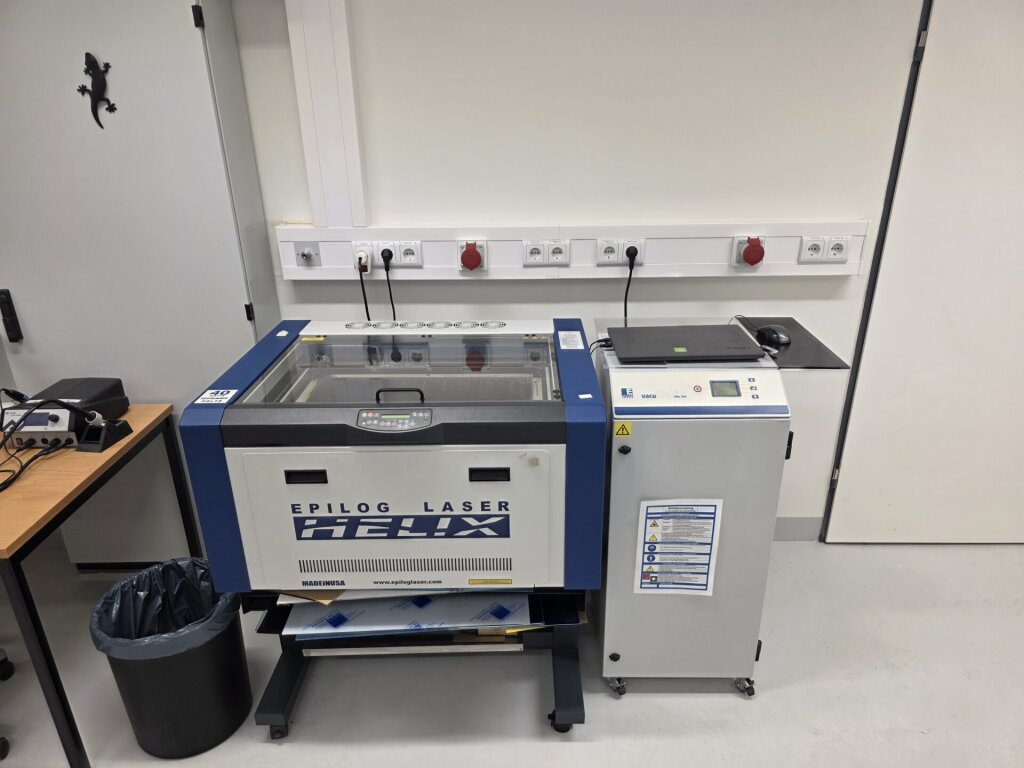 Lasercutter © Spread the Nerd / Rolf Schulten
 -
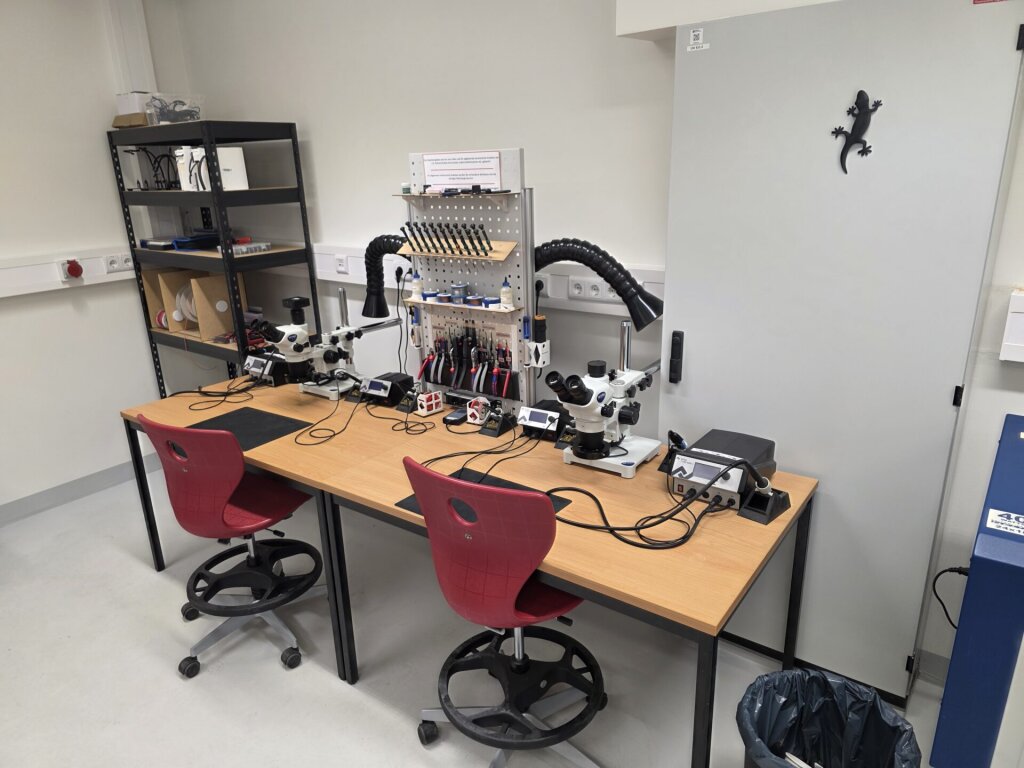 Lötarbeitsplätze © Spread the Nerd / Rolf Schulten
 -
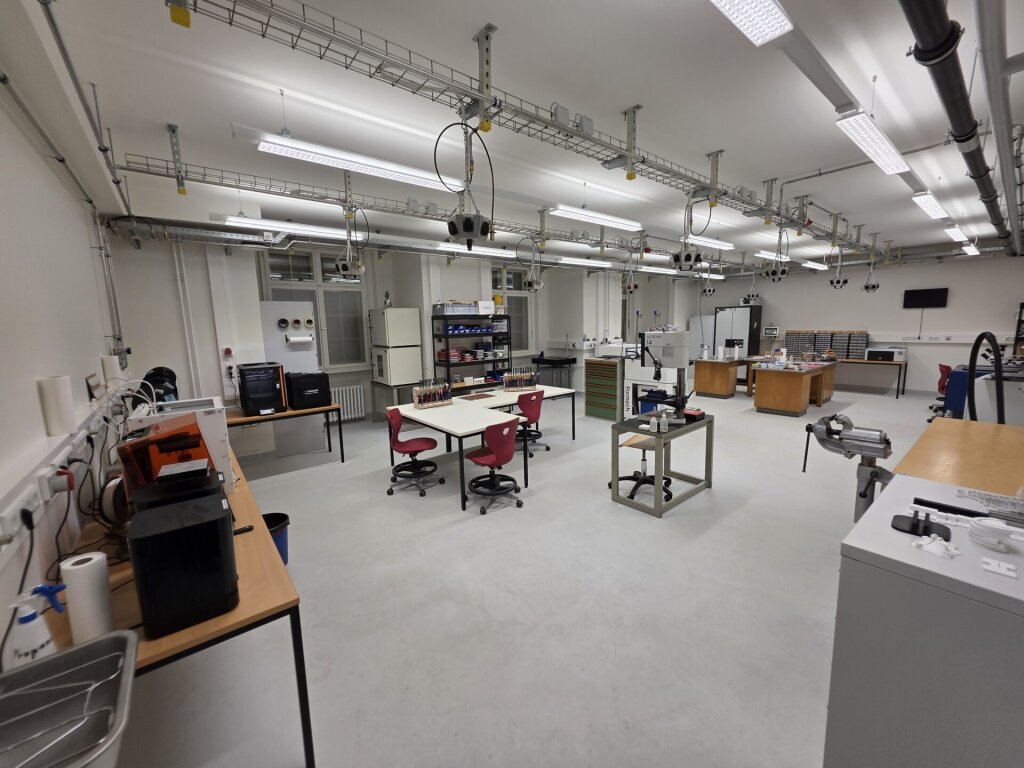 Werkstatt © Spread the Nerd / Rolf Schulten
The Human.VR.Lab
Common infrastructural equipment for the applications (R1-R3)
The Human.VR.Lab, founded using 1.2 million euros of BMBF funding, is an open research laboratory under the umbrella of the BHT. Here, both researchers and interested parties can interact with VR/AR technologies and robotic systems, and experience, test, and investigate future human-centered technology in various (virtual) applications. The Human.VR.Lab consists of a motion tracking space (8x4m) with 8 workstations and a small assembly area, as well as a adjoining VR learning room where training courses and workshops can also take place. The following systems are part of the Human.VR.Lab and can be used by the project:
- Optical motion tracking system: 24 cameras for marker-less and marker-based tracking.
- Electromyography system: 16-channel for acquisition and analysis of muscle activities.
- FDM pressure measuring plate for gait analysis of humans and robots.
- Class sets of VR/AR technologies with newest VR HMDs for multi-user applications.
The Human.VR.Lab is complemented by VITALab.Mobile. This is a mobile VR/AR laboratory for case studies, field studies, and clinical trials to evaluate novel virtual therapies and scientific research. The lab is built into a truck that can reach a wide range of different user groups in a variety of locations. The focus of this interdisciplinary lab is to create a user-friendly and realistic research and interaction environment for diagnostics and therapy in a medical-therapeutic context.
The overall equipment of the Human.VR.Lab makes it possible to measure and analyze demonstration tasks. Scientists and PhD can work closely together, exchange ideas. The lab as a hub of interdisciplinary exchange brings stakeholders together and improves scientific outcome.
-
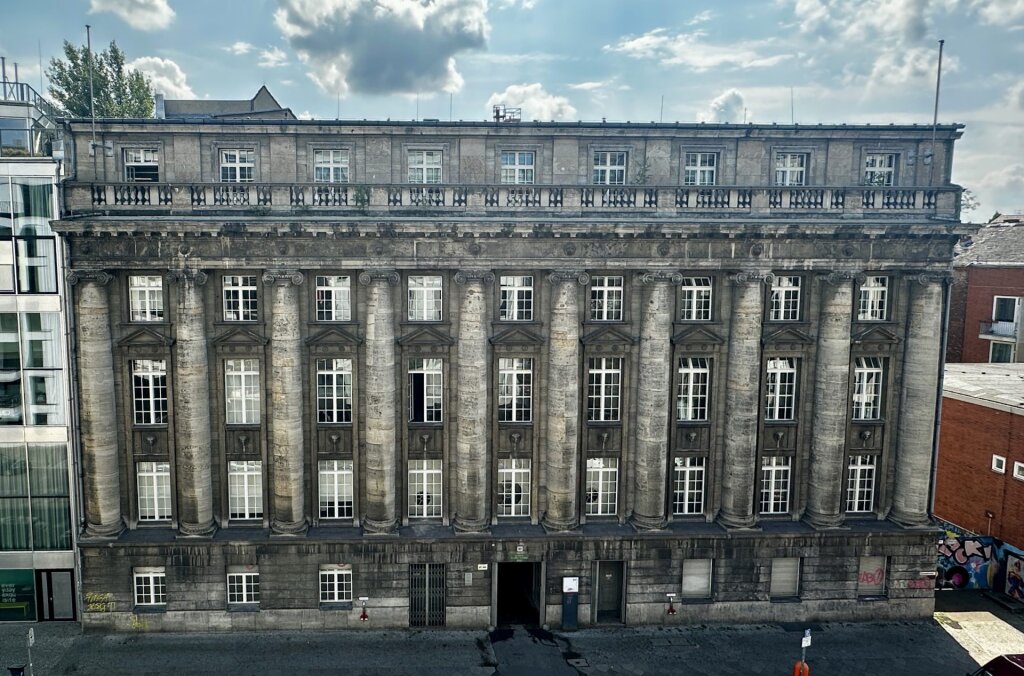 ©Rolf Schulten 2025
 -
© Spread the Nerd / Rolf Schulten 2025
Robotics Infrastructure
In the field of robotics, the associated laboratories at the “House of Robotics” (campus Kurfürstenstraße) offer a wide range of robot systems for researching questions related to locomotion, cognition, and human-robot interaction. The following is a chronological overview of the available robotic systems:
| # | Robotic Systems | Year | Laboratory, Scientist, Field of Activity |
| 1. | Humanoid Robot K1, Booster Robotics |
2026 | Compliant Robotics Lab, Prof. Dr.-Ing. Boblan, for research in the field of dynamic walking |
| 2. | Visuo-Haptic Input Station VHES, in-house development based on Franka Robotics | 2025 | Soft Interactive Robotics Lab, Prof. Dr.-Ing. Höppner, for research in the field of human-robot interaction and object manipulation |
| 3. | Humanoid Robot TIAGo Pro, PAL Robotics | 2025 | Soft Interactive Robotics Lab, Prof. Dr.-Ing. Höppner, for research in the field of human-robot interaction and object manipulation |
| 4. | Humanoid Robot Digit, Agility Robotics |
2021 | Compliant Robotics Lab, Prof. Dr.-Ing. Boblan, for research in the field of dynamic walking |
| 5. | Robot Dog Go1, Unitree Robotics |
2021 | Compliant Robotics Lab, Prof. Dr.-Ing. Boblan, for research in the field of dynamic walking |
| 6. | 2 Robots Panda,
Franka Robotics GmbH |
2020 | Soft Interactive Robotics Lab, Prof. Dr.-Ing. Höppner, for research in the field of human-robot interaction and object manipulation |
| 7. | Robot Trunk BROMMI, In-house development |
2012 | Compliant Robotics Lab, Prof. Dr.-Ing. Boblan, for research in the field of compliant control |
| 8. | Roboter Myon,
In-house development |
2009 | Neurorobotics Research Lab, Prof. Dr. Hild, for research in the field of cognition |
| 9. | Humanoid Muscle Robot ZAR5, In-house development | 2006 | Compliant Robotics Lab, Prof. Dr.-Ing. Boblan, for research in the field of compliant control and humanoid movements |
-
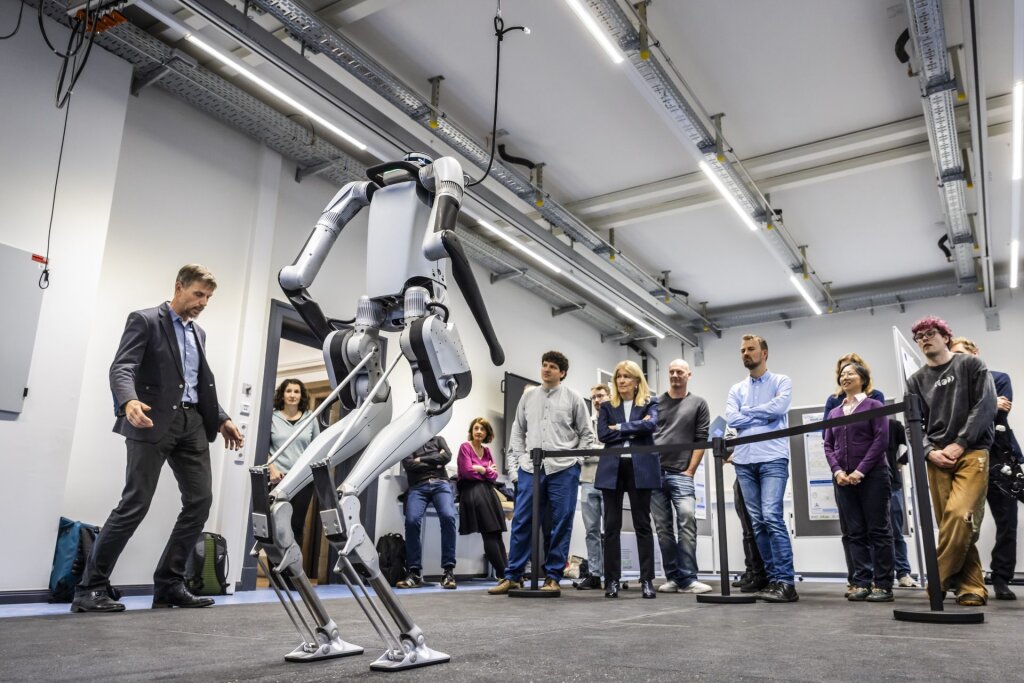 © Spread the Nerd / Rolf Schulten
 -
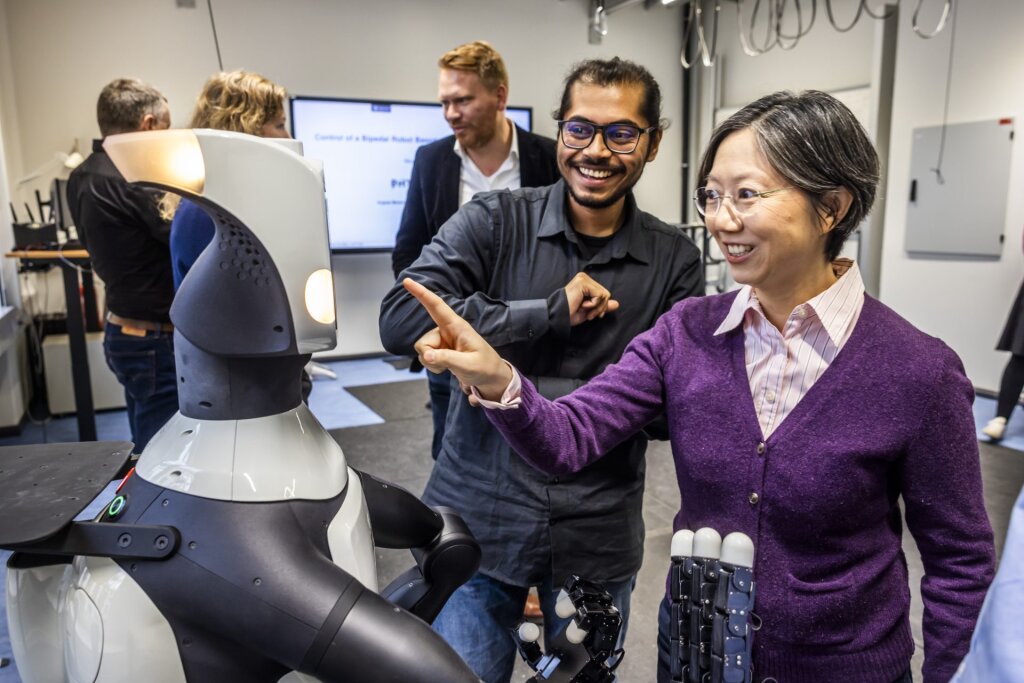 © Spread the Nerd / Rolf Schulten
 -
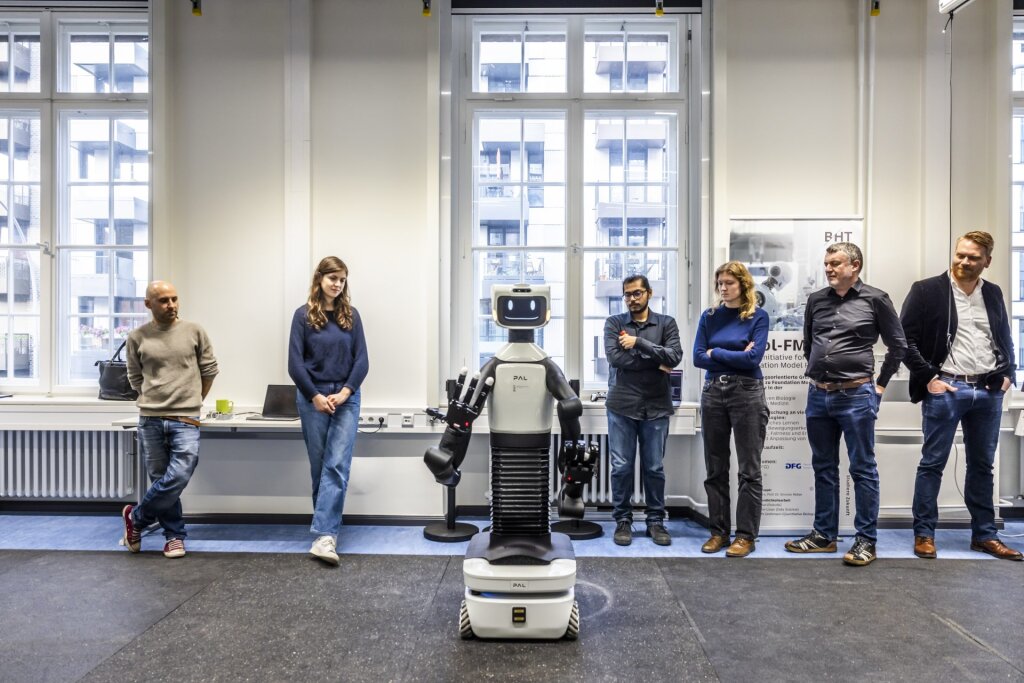 © Spread the Nerd / Rolf Schulten
Robot Infrastructure
Humanoid Robot K1
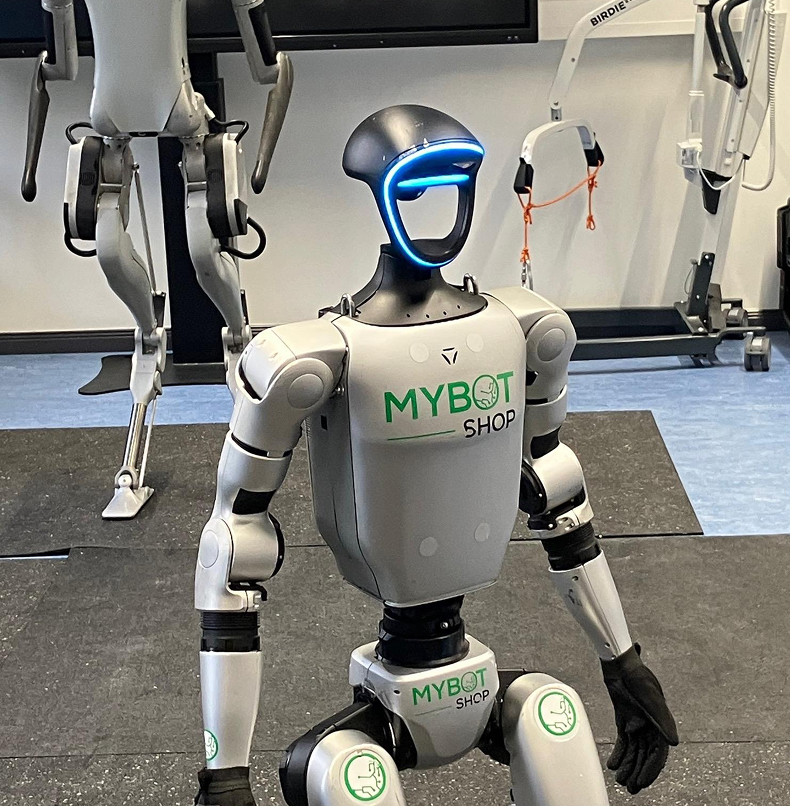
Humanoid Robot K1
Humanoid Robot K1
Humanoid Robot K1